
In early spring, they appear briefly and then disappear, which is why Americans call them by this term - spring ephemerals. Their blooming period lasts only about two weeks at most. On days that are still chilly enough to make you question if it's really spring, these flowers come and go so quickly that, no matter how many are scattered around, people often don't even realize they're there before they're gone.
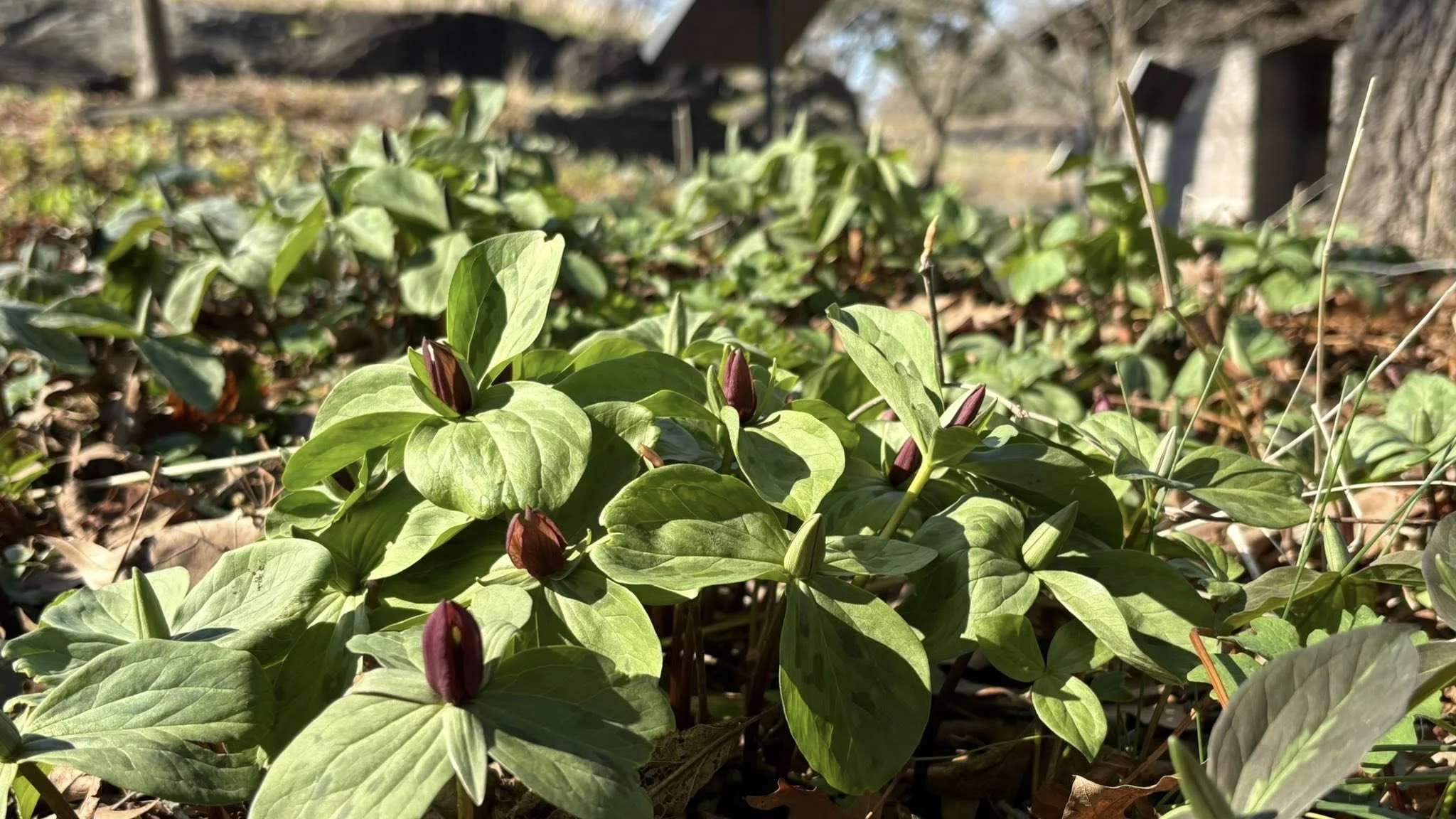
Toadshade (Trillium sessile)
photo by Sunghee Lee @ Natvie Plant Garden, NYBG
It was the case for me as well. After I started studying ‘woodland gardens’, I began to look more often at the forests in native plant gardens. From March to May, miracles happen every day on the forest floor covered with fallen leaves. From the still cold ground, new shoots emerge shyly, then burst into bright blossoms, and just as the leaves start to become lush, before you know it, everything disappears without a trace. In just two months, the entire drama comes to an end. For those who welcome spring by waiting for the cherry blossoms, this drama is unimaginable. Braving the harsh winds, those who venture into gardens or forests in March receive a scene from nature that feels like a shyly offered invitation.
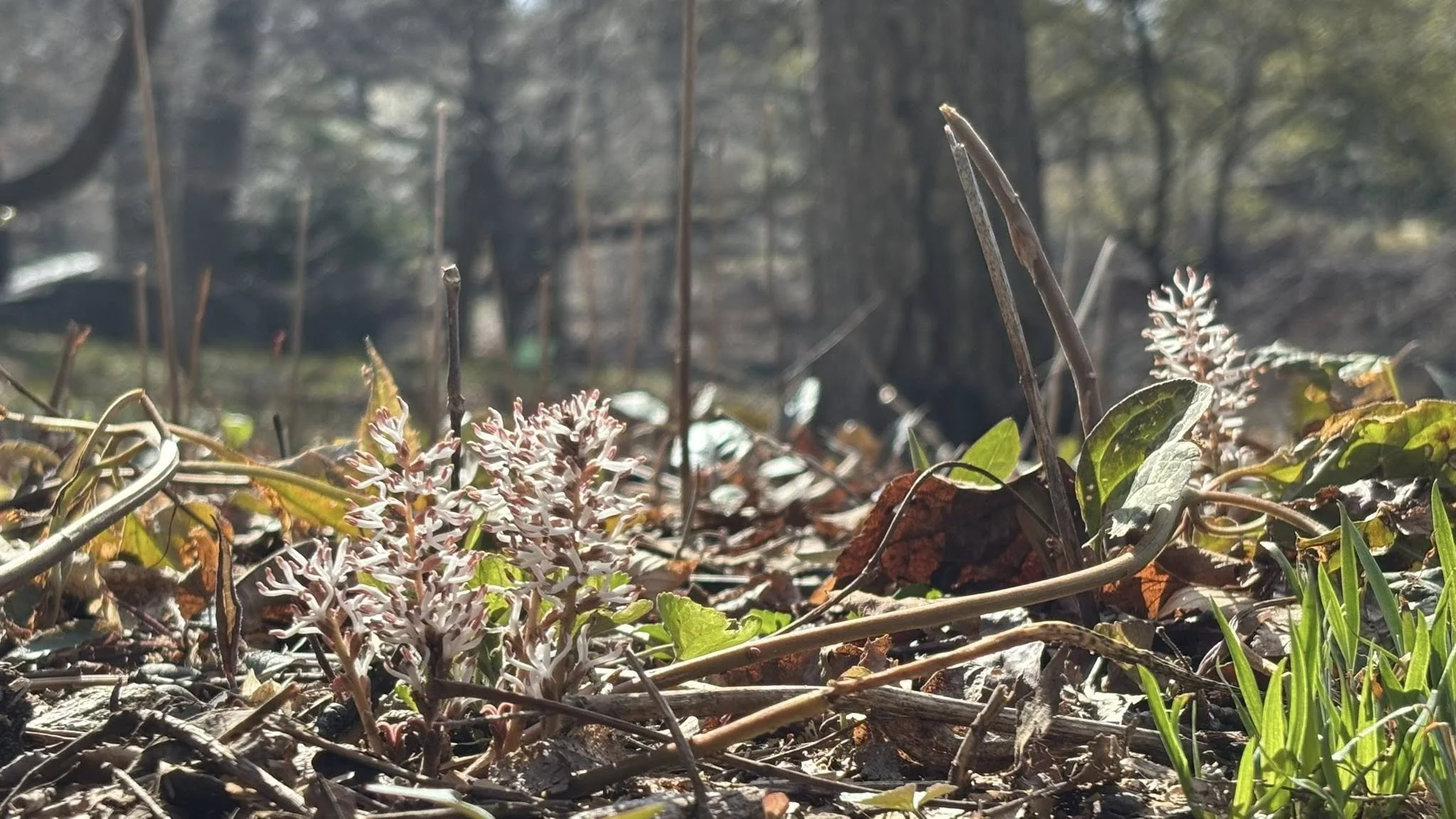
Allegheny spurge (Pachysandra procumbens)
photo by Sunghee Lee @ Natvie Plant Garden, NYBG
Spring ephemerals may live only for a brief moment, but they leave a lasting impression and deep resonance. These plants breathe life out into the cold and dry forests of early spring. For three-quarters of the year, they remain hidden underground, knowing exactly when to peek out and when to bow their heads again—plants that understand their own timing.
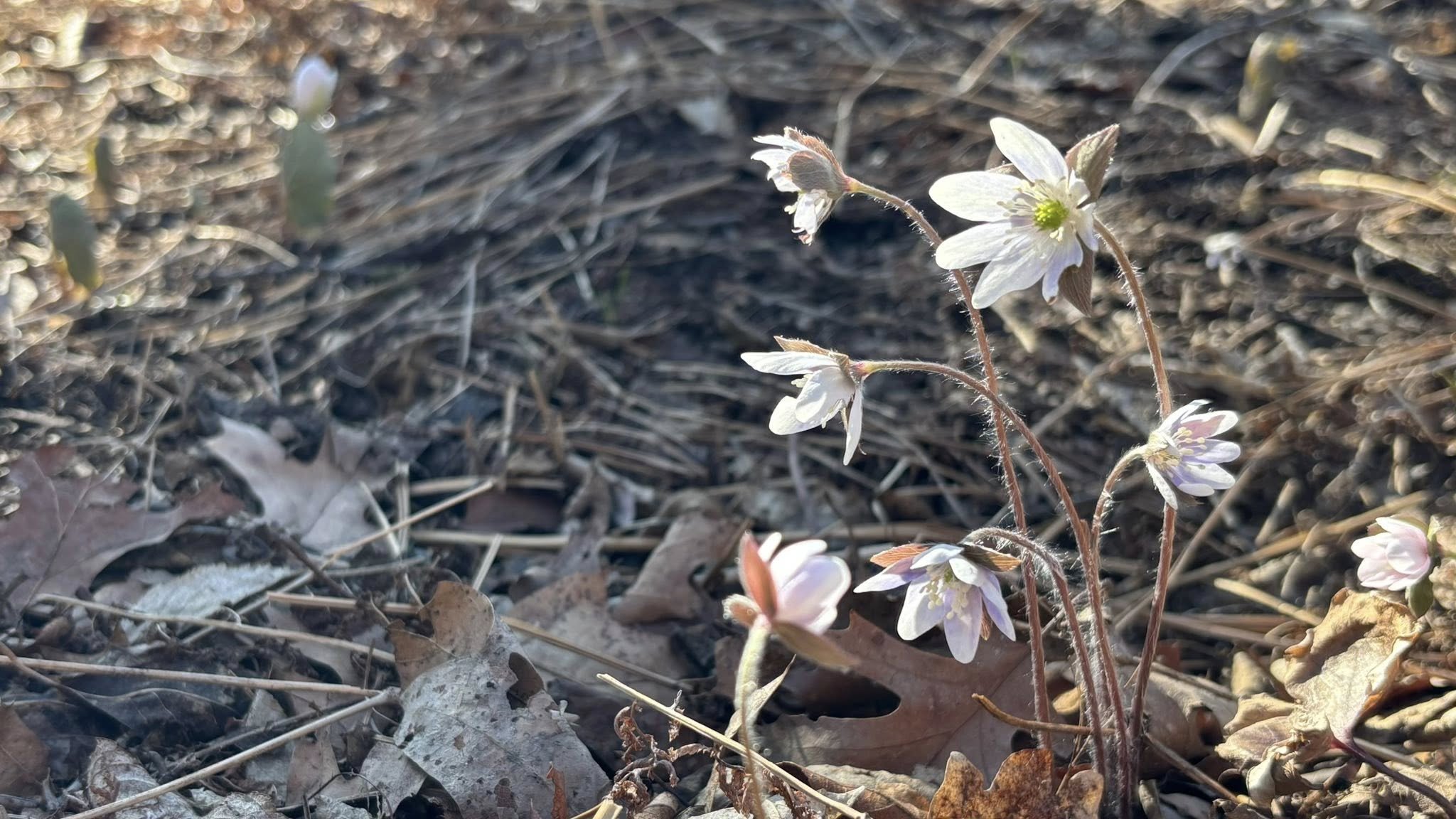
Sharp-Lobed Liverleaf (Hepatica americana var. acuta)
photo by Sunghee Lee @ Natvie Plant Garden, NYBG
Whenever I look at these plants, it feels as though I’m standing on a hillside of the Appalachian Mountains, which is like the backbone of eastern America. Many plants that have been introduced to gardens, especially numerous North American native rhododendrons, originate from there. The most moving piece I heard at my son's youth orchestra concert, where he plays double bass, was Appalachian Spring. Composed originally as ballet music, it was later arranged as a symphonic work and is now frequently performed by orchestras. Sitting on a bench amidst a woodland garden filled with native eastern American plants, closing my eyes and listening to this piece, I feel as though, if only for a moment, I am within a forest somewhere in the Appalachian Mountains.
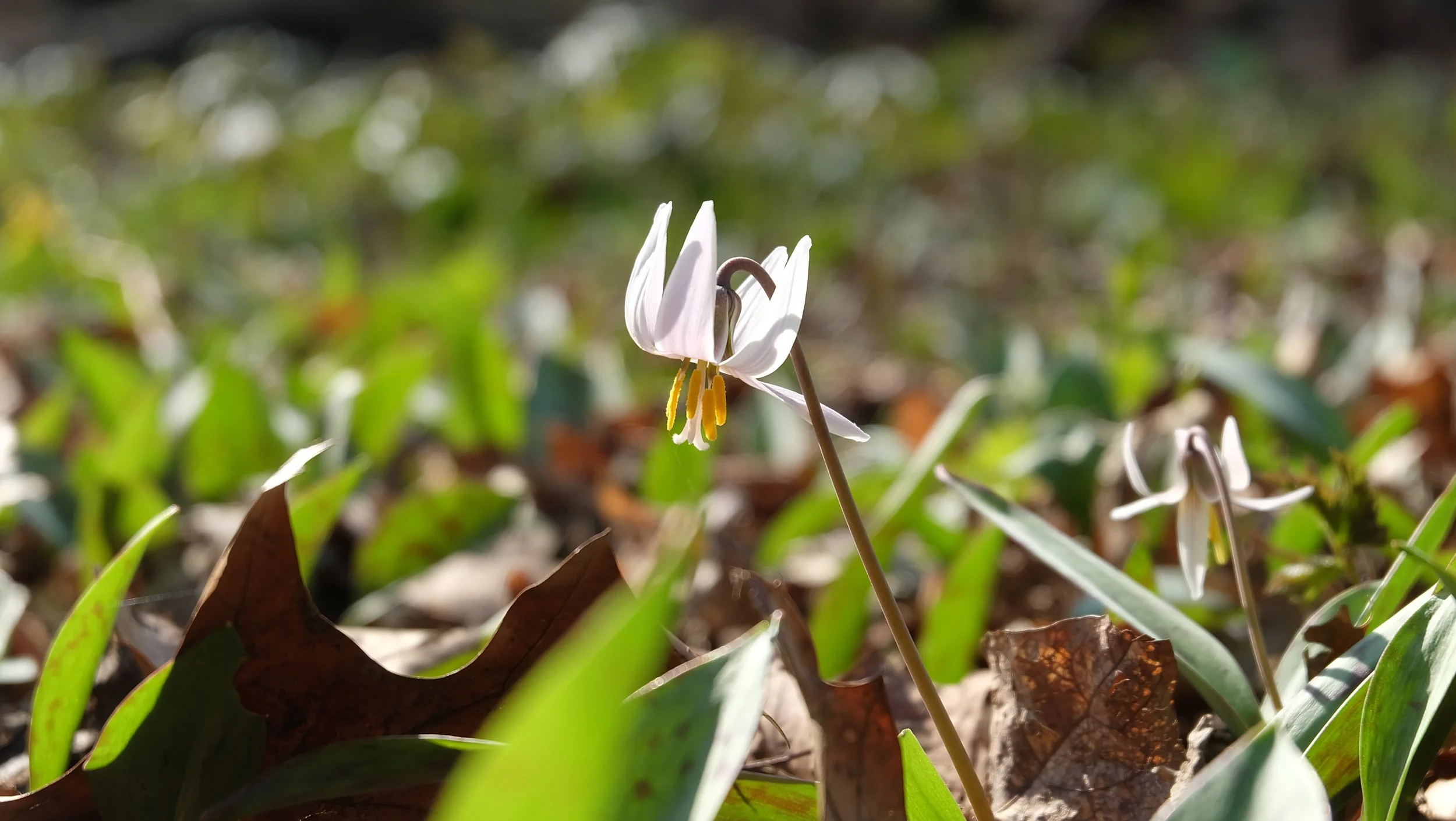
White Troutlily (Erythronium albidum)
photo by Sunghee Lee @ Natvie Plant Garden, NYBG
Snowdrops, daffodils, and tulips also belong to this group. Their vibrant display in city flower beds is beautiful, but nothing compares to the allure of native plants emerging quietly from carpets of fallen leaves, rocks, and old tree roots along a tranquil forest edge. I hope to see more natural woodland gardens where plants like adonis, liverwort, twinleaf, and dogtooth violet sprout up naturally in my home country, South Korea as well.
