
Before I started studying plants, I happened to read Thomas Rainer and Claudia West’s book Planting in a Post-Wild World, and it made me realize that it’s possible to “read” the hazy but beautiful, cloud-like natural vegetation in a scientific way.
Whenever teachers at school gave us planting design assignments, they would say, "You must use a lot of North American native plants." Somehow, that always felt “right” to me. In one of the classes, that book was a supplementary textbook. As I binge-listened to the Native Plant Podcast, I found myself gradually, partially indoctrinated. If my English had been better, I might have been fully indoctrinated.

Bee Balm (Monarda didyma ‘Raspberry Wine’)
photo by Sunghee Lee @ Natvie Plant Garden, NYBG
Later, as I visited the Adirondack Mountains in northern New York State, which spans an area half the size of South Korea, or applied for internships at places like the Native Plant Trust (I applied but ended up going somewhere else, so I gave up on it), or saw photos posted in Facebook groups like Native Plants of The Northeast, or wandered through native plant gardens in botanical gardens like ones in the pictures, I began to experience the charm of individual plants.

Butterfly Milkweed (Asclepias tuberosa)
photo by Sunghee Lee @ Natvie Plant Garden, NYBG
Somehow, gardens composed of these plants started to seem “good” to me. Eventually, when I got to know gardens designed by Piet Oudolf, who is recognized as a master of garden design, or Bong Chan Kim, a leading figure in Korea’s naturalistic garden movement, I realized that by maximizing the beauty of native plants, their gardens elevated the aesthetic, functional, and ecological value of gardens to a completely different level.
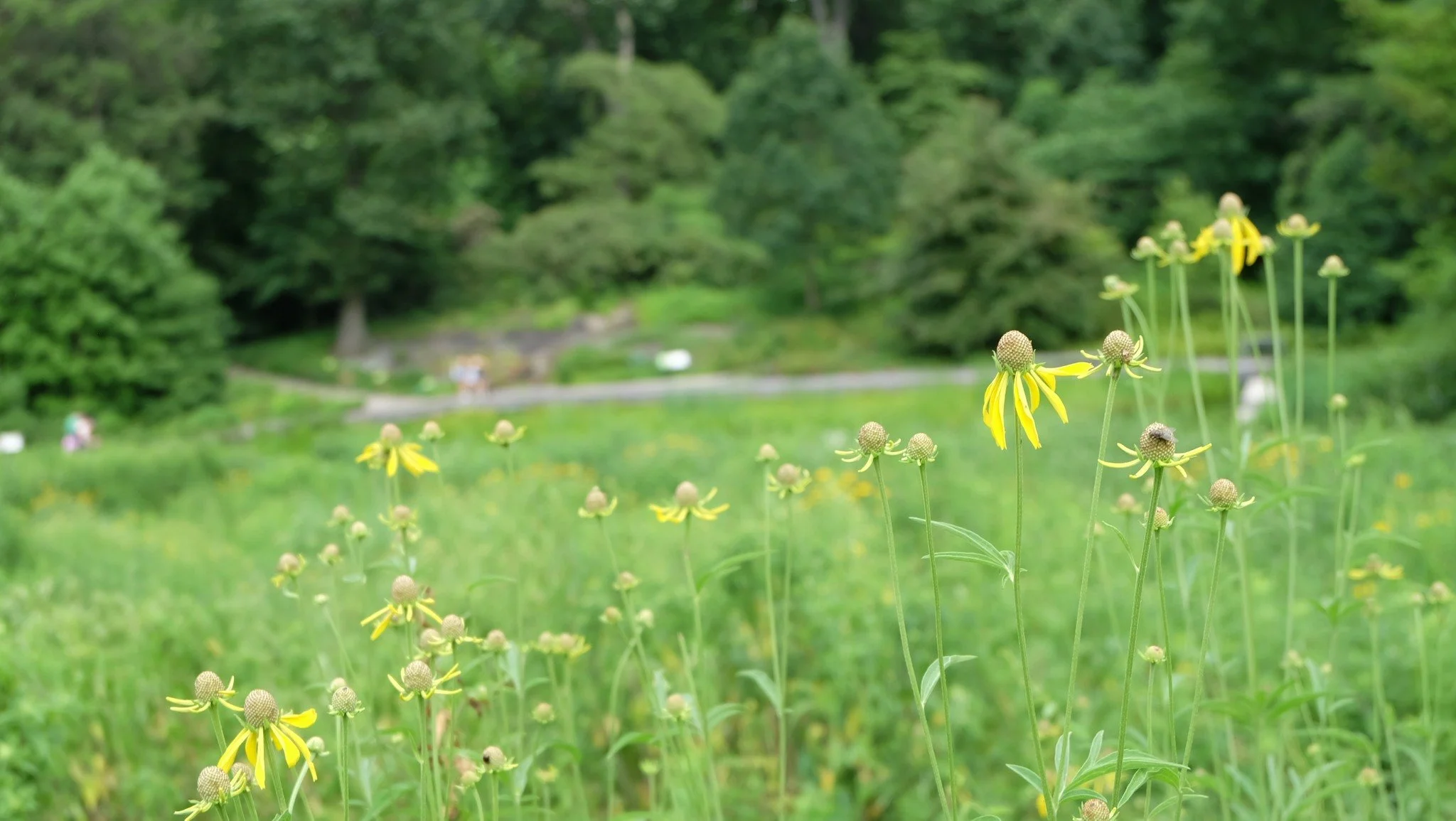
Prairie Coneflower (Ratibida pinnata)
photo by Sunghee Lee @ Natvie Plant Garden, NYBG
I began to pursue such gardens not simply because they are ethically right or pleasing to me, but because they are incredibly beautiful. What is truly beautiful seems to have a power that encompasses everything that is right and good—and even transcends it. Experiencing the feeling of seeing the universe in a single flower, of being absorbed by its beauty or savoring it—or, to use a needlessly complex expression, interpreting that beauty—is perhaps the process itself. To realize this beauty through design is surely not just the result of talent or effort, but the outcome of immense talent combined with immense effort. That’s why I can’t help but respect the designers.
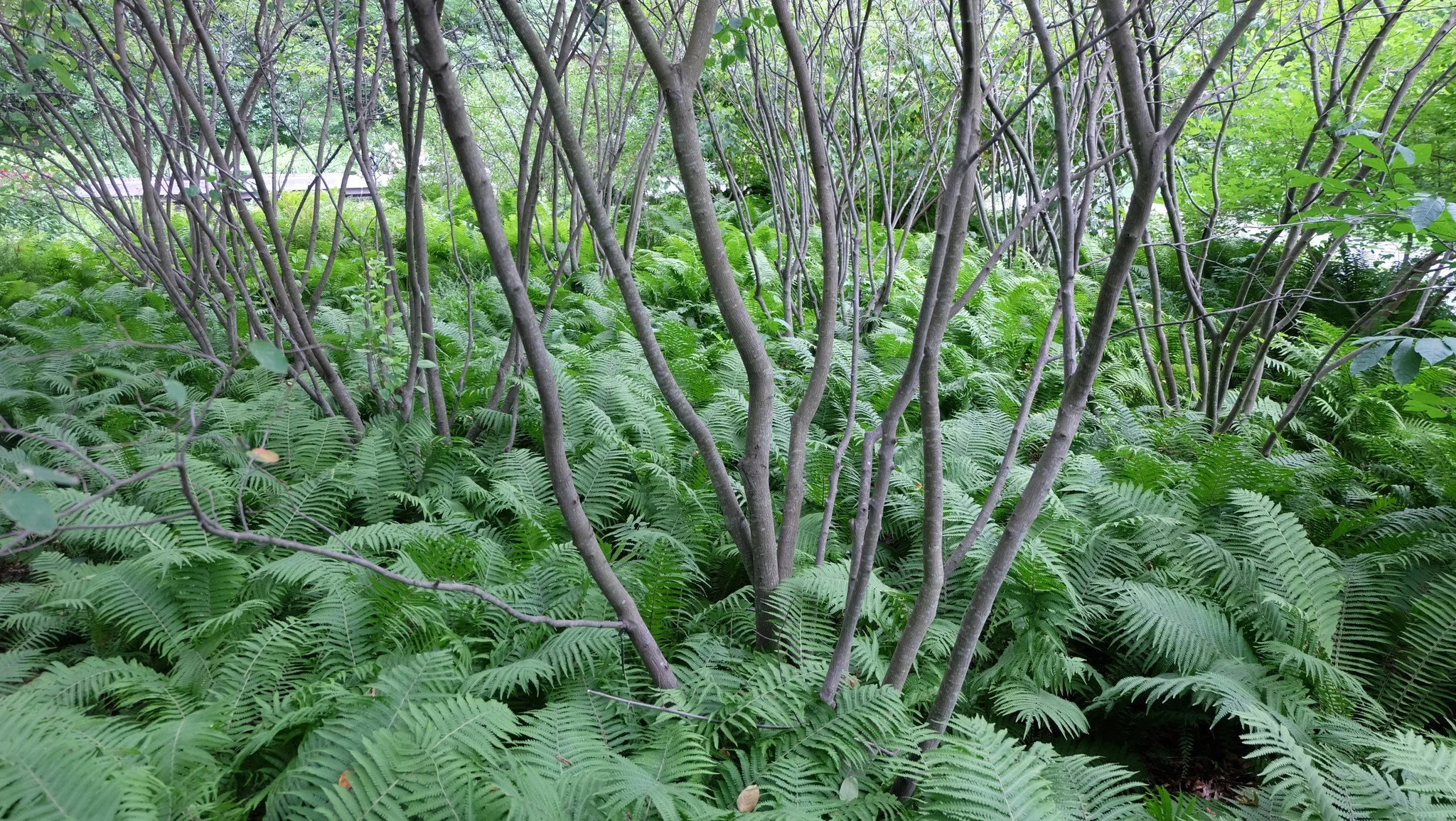
Serviceberry (Amelanchier x grandiflora 'Autumn Brilliance'), Ostrich Fern (Matteuccia struthiopteris)
photo by Sunghee Lee @ Natvie Plant Garden, NYBG
